The Meeting-Ready Cabin: Working Realities on a UK Private Charter
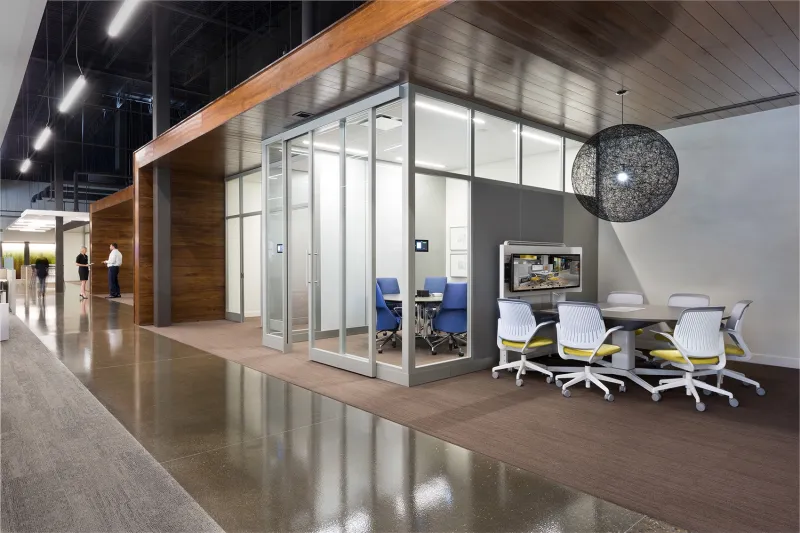
Photo: business passenger working on laptop aboard private jet cabin with table and window light, via www.officelovin.com
Private aviation is often presented as an office in the sky. For UK clients with a demanding European calendar, the appeal is understandable: a departure close to home, a short drive to the aircraft, and a same-day return that does not consume the better part of two days. Yet the working reality aboard a private charter is more varied than the brochure language suggests. The cabin can be an excellent place to prepare, review and recover; it is rarely a substitute for a fully equipped desk. The difference lies in specification.
What the cabin actually provides
The first point to establish is that a private cabin is not automatically a working cabin. Light jets, such as the Embraer Phenom 300 or Cessna Citation CJ3, typically offer club seating for four to six passengers, with small fold-out tables suited to a laptop and a folder rather than a full spread of papers. Midsize aircraft improve the geometry, while super-midsize and large-cabin types, including the Challenger 350, Praetor 600, Falcon 7X and Global series, provide proper tables, greater headroom and, in some cases, a separate conference or divan area.
For a UK buyer, the practical question is not simply how many seats the aircraft has. It is whether two or three people can work facing one another without disturbing a fourth, whether a table is stable enough for a laptop during taxi and climb, and whether there is somewhere to place a printed presentation without it sliding to the floor. Ask for the floorplan and seat map before committing. A cabin that looks generous in a photograph can be awkward once laptops, phones and papers are deployed.
Connectivity: confirm in writing, do not assume
Wi-Fi is the most over-promised element of the private cabin. Some aircraft offer reliable satellite connectivity suitable for email and file transfer; others rely on air-to-ground systems with variable coverage over Europe; some have no installed Wi-Fi at all. Bandwidth, latency and cost vary considerably. For a video call, a dedicated satcom system is desirable, but coverage over the North Sea, remote Alpine regions or parts of eastern Europe may still be imperfect.
Before booking, ask for the provider, the expected speed, whether voice over IP is supported and whether there is a data cap. Confirm the answer in the charter agreement rather than relying on a verbal assurance. Test the connection on the ground before departure if a critical call is scheduled. Have an offline copy of the deck, a printed summary and a local mobile SIM as backup. Scheduled business class often provides more predictable connectivity, even if it is paid for and occasionally slow; the private cabin demands a contingency plan.
Noise, lighting and the working body
Cabin noise is a factor that frequent private flyers learn to manage. Light jets can be lively, particularly during climb; larger aircraft are quieter but not silent. Noise-cancelling headsets are essential for calls and concentration, and speakerphone use is rarely practical. If a confidential discussion is required, confirm whether the aircraft has a partition or a separate cabin zone. Many light and midsize types do not.
Lighting matters more than it is often given credit for. Older cabins may have fluorescent or limited natural light; newer aircraft tend to offer adjustable LED systems. For an early departure to Frankfurt or a late return from Milan, the ability to dim or brighten the cabin helps to protect the working rhythm. Cabin altitude, typically between 5,000 and 8,000 feet, can cause mild dehydration and fatigue. Water, eye drops and restraint with alcohol before a presentation are sensible measures.
Turbulence is the honest limitation. A laptop on a fold-out table is not always usable during the descent or in unsettled weather. Plan tasks by phase: calls and reviews in the cruise, administrative work on the ground, and nothing that requires a steady hand during the approach.
The routes where it earns its keep
From London, the same-day private charter calculation is most convincing on routes of one to two hours. Paris, Brussels, Amsterdam, Frankfurt, Zurich, Geneva, Milan and Dublin are all plausible. A 07:15 departure from Farnborough or Luton can place a passenger in central Paris or Brussels before 10:00 local time, with a car pre-positioned at the far end. A return in the late afternoon or early evening preserves the working day.
The comparison with scheduled business class is not always favourable on every route. A 06:30 British Airways flight from Heathrow to Paris may also deliver a 09:30 meeting, but it requires an earlier start, terminal time and a less flexible arrival airport. The private advantage is greatest when a team of three or four is travelling together, when the meeting is confidential, when multiple stops are involved, or when the destination is poorly served by scheduled carriers. For a single traveller on a straightforward London-Paris day, business class can be the more rational choice.
Scheduled business class: the honest comparison
Scheduled business class offers predictable processes, a lounge in which to work, and connectivity that is usually reliable enough for email. It also offers a defined seat and a known arrival airport. The private cabin offers time compression, privacy, flexible baggage and the ability to change plans at short notice. It does not necessarily offer a better desk, a quieter environment or a more dependable internet connection.
The private cabin is best understood as a compressed transition between offices rather than an office itself. It buys the hour before the meeting and the hour after, not a full working day at altitude. Clients who expect to run a video conference, review a lengthy document and take a scheduled call during a 75-minute flight are likely to be disappointed. Clients who use the time to prepare, rehearse and arrive composed are likely to find it valuable.
A specification checklist for UK buyers
- Define the mission: how many people will work, and what tasks require a table, a call or privacy.
- Request the aircraft floorplan, seat map and table dimensions.
- Confirm connectivity in writing, including provider, speed and data allowance.
- Check power sockets and adapter requirements.
- Ask about cabin noise and whether noise-cancelling headsets are provided.
- Confirm lighting controls and natural light.
- Establish whether a partition or separate cabin zone is available for calls.
- Check baggage capacity for presentation materials and equipment.
- Arrange ground transport at both ends before departure.
- Prepare an offline deck, printed summary and mobile data backup.
- Confirm catering and water, particularly for early departures.
- Have a contingency plan for delays, turbulence or connectivity failure.
For 2026, the UK buyer has more choice than ever between aircraft types and operators. That choice should be exercised with the working day in mind. Book the cabin for the work it must support, not the image it projects. A private charter can make a European meeting genuinely plausible from London; it will only make the passenger meeting-ready if the details are settled before the aircraft door closes.