The Late Brief: Private Charter from the UK at a Day's Notice

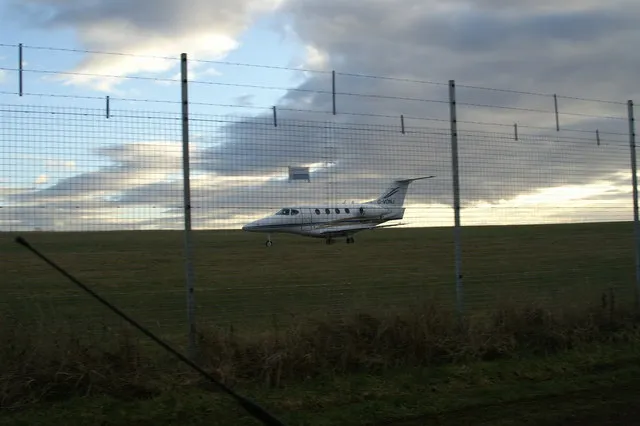
Photo: Thomas Nugent , CC BY-SA 2.0, via Wikimedia Commons
Private charter at short notice is often described as a matter of having the right telephone number. In practice, it is a matter of having the right brief. Within the twenty-four-hour window that most UK travellers mean by last-minute, an operator can still assemble a credible flight, but only where aircraft availability, crew duty and airport access align. The difference between a smooth departure and an expensive compromise is usually made in the first ten minutes of the enquiry.
What the twenty-four-hour window actually contains
A day's notice is not a single service. It may mean a departure in four hours, a departure tomorrow morning, or a departure at a fixed time tomorrow evening. Each presents a different operational problem. A same-day request narrows the field to aircraft already positioned in the UK or within short repositioning range, with a crew that remains inside its permitted duty period. A next-day request opens the market considerably, because an operator can move an aircraft overnight and schedule crew rest correctly.
In 2026, the UK charter market has depth, but it is not infinite. The useful question is not simply whether a jet is available, but whether the right jet, crew and airport handling can be brought together without breaching the rules that govern commercial flying. A reputable operator will answer that question directly rather than promise a departure it cannot legally or practically deliver.
How operators source an aircraft at short notice
Operators draw on several sources: their own fleet, the fleets of partner operators, and the wider broker network. They also monitor empty legs, where an aircraft must reposition and a one-way charter can be placed at a more attractive rate. For a short European sector, a light jet may be sufficient; for greater baggage, a larger cabin or a longer sector, a midsize or super-midsize aircraft is more appropriate. The skill lies in matching the mission rather than simply offering the nearest available tail.
Repositioning is the hidden variable. An aircraft may be free, but not in the right place. Moving it to a UK airport costs time and money, and may push the flight beyond the requested window. This is why a flexible departure airport or a slightly wider time band can transform a difficult request into a straightforward one.
The brief that gets a fast, accurate answer
Speed comes from precision. A useful first enquiry states the passenger count, the route, the preferred UK departure airports, the destination airport if known, and the time window. It should also set out baggage volume, including ski or golf equipment, and any special requirements such as pets, accessibility needs or fragile items. For international flights, passport and visa circumstances should be flagged early, because they can affect routing and handling.
Equally important is the priority. If the appointment time is immovable, say so. If the airport matters more than the aircraft type, say so. If the budget has a ceiling, state it. Operators can work with constraints; they cannot work with ambiguity. A concise brief with a clear hierarchy of needs will usually produce a more useful quote than a series of messages that gradually reveal the requirement.
Routes that remain realistic within a day
From the UK, the most dependable short-notice routes are the established European business and leisure corridors: Paris, Brussels, Amsterdam, Geneva, Zurich, Milan, Nice, Barcelona and Madrid. These are well served by charter aircraft and handling agents, and the flight times are modest. Dublin and other near-European destinations are also practical when aircraft and crew are in position.
Longer or less familiar routes demand more caution. Airports with limited opening hours, constrained slots or specialist permits can add friction. During the coming ski season, Geneva and the Swiss and French alpine airports can become slot-sensitive at weekends, while London City has its own operating restrictions. A day's notice may still work, but the choice of airport and time will be narrower, and the premium will reflect that scarcity.
Where the hard limits lie
Crew duty is the limit most often underestimated. Commercial pilots work within flight duty period rules that account for reporting time, flying hours, delays and rest. An operator cannot simply add another leg because a customer asks; the crew must remain legal. Airport slots, night curfews, handling notice periods and customs arrangements impose further boundaries. Weather can remove the remaining flexibility at short notice, particularly in winter.
Peak demand sharpens all of this. School holidays, December 2026, major sporting fixtures and the ski weekends of January and February 2027 absorb available aircraft quickly. A last-minute request in those periods is not impossible, but it is a different proposition from a quiet midweek departure in November. The premium buys access and speed, not immunity from regulation or congestion.
When the premium is genuinely worth it
A last-minute charter earns its cost when time, privacy and control matter more than the fare difference. A group of six travelling to a fixed meeting, a family with bulky baggage and a tight connection, or a traveller carrying specialised equipment may find that the door-to-door calculation favours private aviation even at short notice. Direct access to a smaller airport can also remove hours of surface travel and uncertainty.
It is less compelling for a single traveller on a short route with frequent scheduled service and flexible plans. In those cases, a scheduled cabin or, on some routes, rail may be the more rational choice. The premium should be judged against the whole journey: the time saved, the risk avoided and the value of arriving composed.
The discipline of deciding early
Last-minute charter works best when it is treated as a disciplined exercise rather than an emergency. Prepare the brief before making enquiries, accept a realistic choice of airport or time, and avoid sending the same request to multiple brokers in the hope of a lower price. Duplicate enquiries can slow the market rather than speed it. Once a suitable aircraft is identified, clear authorisation and prompt confirmation protect the option.
For UK travellers with an immovable date in a peak period, the wiser course remains to book earlier. But when plans change and a private flight is the sensible answer, a precise brief and a realistic route will do more than any last-minute heroics. The twenty-four-hour horizon is narrow, but it is not closed.