The Provenance Protocol: Bringing European Wine Home by Private Aircraft
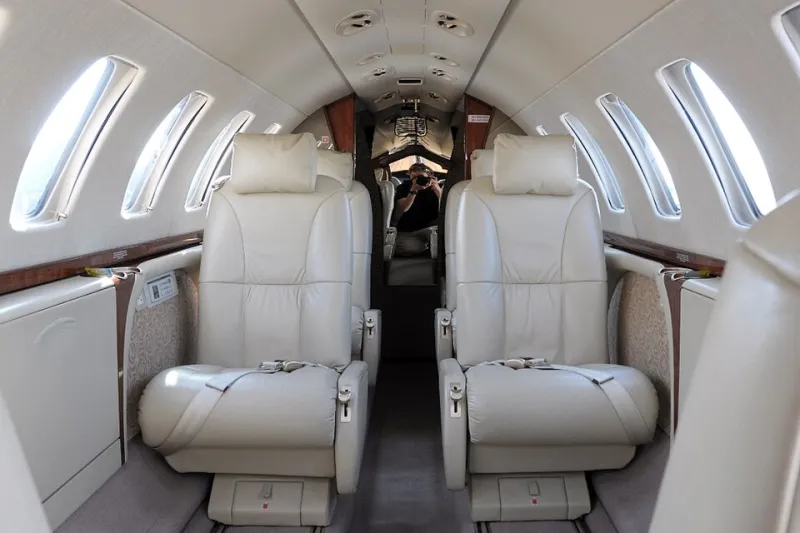
Photo: Biggerben, CC BY-SA 3.0, via Wikimedia Commons
A case of wine bought at a cellar in Bordeaux or a hilltop estate in Tuscany carries more than liquid. It carries the visit, the conversation and the particular barrel sample that persuaded the buyer. The return journey, however, is governed by less romantic forces: customs allowances, ambient temperature, handling practice and the quality of the insurance file. Private aviation can remove much of the friction, but only if the arrangement is treated as a logistics exercise rather than an afterthought to the holiday.
For UK buyers in 2026, the appeal is understandable. A private charter from a regional French or Italian airfield can place a case in Britain within hours rather than days, reducing the time wine spends in vans, depots and unheated holds. That is a genuine advantage for mature bottles and for purchases where provenance matters. It is not, however, a substitute for declaring goods correctly or for briefing the operator with the specificity that valuable wine deserves.
Begin with the bottle, not the aircraft
The first decision is what is actually travelling. A mixed case of everyday drinking wine and a single mature Burgundy do not require the same treatment. Nor do they carry the same paperwork burden. Before approaching an operator, establish the number of bottles, their approximate value, whether they are being bought for personal consumption or for a business, and whether any bottle is old, fragile or unusually sensitive to temperature.
That information shapes the brief. A dozen bottles for a weekend house in Norfolk can travel simply, provided they are declared within the UK personal allowance. A larger purchase, or a case intended for resale, moves into different territory: commercial import, excise duty, VAT and the need for a customs broker. Private aviation is not a route around those obligations, and an operator should never be asked to treat it as one.
The allowances that actually apply
For a UK resident returning from the EU with alcohol for personal use, the published allowances are broad but finite. In practice, the familiar limits include 18 litres of still wine, 9 litres of sparkling wine, 4 litres of spirits and 42 litres of beer. These figures are not an invitation to assume that any quantity is acceptable; they apply to goods carried for personal use and can be revised. The prudent buyer checks the current HMRC guidance before travel, keeps receipts and is ready to explain the purpose of the purchase.
Anything above the allowance must be declared, with duty and VAT paid as required. The same principle applies to a private flight as to a ferry. The aircraft may arrive at a quieter airport, but it does not arrive outside the UK customs system. The pilot or operator will normally file a General Aviation Report before departure, and the flight should land at an airport with the appropriate customs and Border Force presence. Not every attractive local airfield can receive an international arrival, so this should be settled early.
Temperature, vibration and the route home
Wine is resilient, but it is not indifferent to its surroundings. Sustained heat above roughly 25°C can push a wine toward cooked, flat flavours; repeated freezing can push corks and fracture the bottle's integrity. Short spells are usually less damaging than prolonged exposure, which is why the weakest part of many private wine journeys is not the flight itself but the road transfer, the wait on a warm apron or an unheated hold.
A private aircraft cabin is often the best place for a high-value case: stable, pressurised and attended. Cargo holds vary by type and operator, and a hold that is acceptable for luggage may not be ideal for wine. The brief should therefore specify whether the case is to travel in the cabin or the hold, what temperature range is expected, how long the bottles will sit on the ground and whether the operator can provide a climate-controlled vehicle for the final road leg.
Vibration is a lesser concern over a short European flight, but loose bottles in a hold are still poorly served by hard cases and hurried handling. Specialist wine shippers use pulp, foam or moulded inserts that hold bottles individually; these are worth using even when the flight is brief. A data logger placed in the case is a small expense that answers a large question later.
Paperwork, provenance and the insurance file
For personal imports, the paperwork need not be elaborate, but it should be coherent. Keep the merchant's invoice, a packing list and proof of purchase. If the wine is being shipped separately, the transport documents should match the bottles. For commercial quantities, use a customs broker and expect the language of excise duty, VAT and, where relevant, bonded movement.
Insurance deserves the same care. Household policies and ordinary travel cover may not respond fully to wine in transit, particularly if the bottles are old or the value is high. Specialist transit cover should be arranged on an all-risk basis where possible, with the bottles described accurately, the route disclosed and the packing method confirmed. Photograph the labels and capsule condition before departure. If a bottle is already fragile, say so; insurers dislike surprises more than they dislike risk.
Provenance is part of the value, so keep it visible. A merchant's invoice, cellar record or tasting note may seem incidental until a bottle is damaged or a future sale requires evidence. For serious buyers, a simple digital file containing the purchase record, the travel dates and the condition photographs is not bureaucracy. It is the difference between a bottle with a story and a bottle with a question mark.
How to brief an operator
A good brief is specific without being theatrical. Tell the operator the number of bottles, the approximate value, the collection address and the departure airfield. State whether the wine must travel in the cabin, whether it needs a climate-controlled vehicle and whether the arrival airport must have customs facilities. Ask who handles the case at each stage, what happens in the event of a delay and whether the operator has previous experience with wine shipments.
Ask, too, about the final mile. A private flight that ends with a case left in a warm terminal or transferred to an unventilated van has solved only part of the problem. The best arrangements treat the journey as a single chain from cellar to cellar, with the same care applied on the ground as in the air.
A calm arrival
The pleasure of a private flight home with wine is not the aircraft itself. It is the absence of the usual compromises: the case that has not sat for hours in a depot, the labels that have not been scuffed by automated handling, the declaration that has been made properly and the insurance that would actually respond if something went wrong. For UK buyers who value provenance as much as the bottle, that quiet chain of custody is the real luxury. It is also the part worth arranging before the first case is bought.