Packing Without Pretences: A Realistic Luggage Guide for UK Private Flyers
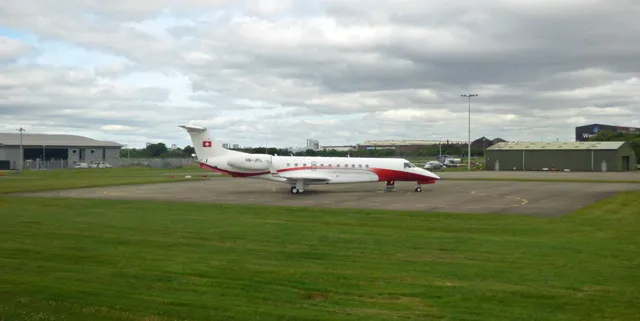
Photo: Colin Cooke Photo, CC BY-SA 2.0, via Wikimedia Commons
Ask a charter broker whether there is a baggage limit and the answer may be a cheerful ‘it depends’. Ask a flight operations team and the answer will be more precise: every aircraft has a maximum take-off weight, a zero-fuel weight, a hold volume, a door size and a floor loading limit. The phrase ‘unlimited baggage’ is a marketing convenience, not an operational reality. For UK clients, the practical task is to match the bags to the aircraft before the booking is confirmed.
Why ‘unlimited baggage’ is a charter myth
Private aviation removes the airline’s per-passenger bag tariff, but it does not remove physics. A light jet carrying four adults with heavy winter coats, laptop bags and hard-shell suitcases can approach its payload limit before the hold is full. Weight and balance must be calculated for every flight, and the commander has the final say. On a short UK-to-Europe leg, fuel load is usually modest, which helps; on a longer sector with winter reserves, payload can be tighter.
The other constraint is volume. A large hold with a small door is not useful for a golf bag. A long ski bag may fit in a super-midsize jet but not in a light jet. Clients should ask for the hold volume in cubic feet, the maximum single-item length and the number of bags the operator expects for the planned passenger load.
Hold capacity by aircraft class
A turboprop such as a King Air 350 or Pilatus PC-12 typically carries a useful hold of around 50 to 70 cubic feet. That is enough for four to six soft bags or a couple of golf bags, but not for a family’s ski equipment.
A light jet such as a Phenom 300 or Citation CJ3 offers roughly 60 to 80 cubic feet. It suits short UK breaks and business trips, but bulky items reduce the passenger count quickly.
A midsize jet such as a Citation XLS or Hawker 800 offers around 80 to 120 cubic feet. This is the practical sweet spot for golf trips and longer weekends, though four large hard cases plus golf clubs can still be tight.
A super-midsize jet such as a Challenger 350 or Citation Longitude offers about 110 to 155 cubic feet. Ski bags and shopping become more manageable, and six passengers can travel with a sensible bag each.
A large-cabin aircraft such as a Falcon 900, Challenger 650 or Global 6000 offers 195 to 300 cubic feet or more. These are the aircraft for long-haul shopping trips, film equipment, art handling or a family with serious luggage. Even here, weight and balance rules apply.
These figures are indicative. Operators configure aircraft differently, and a particular registration may have a reduced hold because of auxiliary tanks or interior layout. Always confirm the specific aircraft.
Golf clubs, ski gear and the winter problem
Golf clubs are usually carried in a hard case and weigh 12 to 20 kilograms. They fit in most light jets and all midsize aircraft, but they count towards both weight and volume. A four-ball golf trip on a light jet may need a larger aircraft than the passenger count alone suggests.
Ski gear is more demanding. A ski bag can be 1.8 to 2 metres long, and boots add weight and bulk. Light jets often struggle; super-midsize and large-cabin aircraft are the safer choice. In winter, de-icing fluid and weather reserves can reduce available payload, so the operator may ask for softer bags or fewer pairs. UK clients heading to the Alps should book the aircraft around the ski bag, not the other way round.
Shopping, duty-free and customs reality
Private terminals are not shopping centres. Most UK FBOs do not offer duty-free in the way a Heathrow terminal does, and arrivals still fall under UK customs allowances. Alcohol, tobacco, perfume and other goods brought back from Europe must be within personal allowances or declared. Keeping receipts is sensible. If the purpose is a serious shopping trip, the aircraft’s hold volume matters as much as the cabin.
Security rules also apply. Some private terminals have their own screening; liquids, laptops and restricted items may still be checked. Duty-free alcohol purchased abroad should remain sealed and accompanied by the receipt. Do not assume that a private departure means no security at all.
Items that still need special handling
Lithium batteries, including spare power banks, must usually travel in the cabin and be declared in advance. E-bikes, hoverboards and large battery packs are often restricted or forbidden. Firearms and ammunition require UK licensing and operator approval, and they will not be accepted on a normal charter without specific arrangements. Pets are a separate subject and need their own documentation and carrier approval. Perishables, medical devices, artworks and high-value items should be notified at the quote stage. Cash and negotiable instruments may raise reporting requirements.
The common thread is advance notice. A charter operator can solve many problems with 48 to 72 hours’ warning; the same problem at the FBO on the morning of departure is much harder.
A pre-flight checklist for UK clients
Confirm the aircraft type and registration, not just the category. Ask for hold volume in cubic feet, maximum bag length and the payload available for the planned passenger load. Weigh and measure the largest cases. Use hard cases for golf and ski equipment and label them clearly. Declare lithium batteries, medical devices and any restricted items. Check UK customs allowances before returning with alcohol or tobacco. Arrive 20 to 30 minutes before departure for a private flight, and allow more at a shared FBO. Send the final bag count to the operator the day before.
Private aviation can be remarkably accommodating with luggage, but it rewards precision. The clients who travel best are the ones who treat the hold as a finite space, not a marketing promise.