The Ground-Level Gain: Nine Alternative UK Airfields That Reclaim Your Day
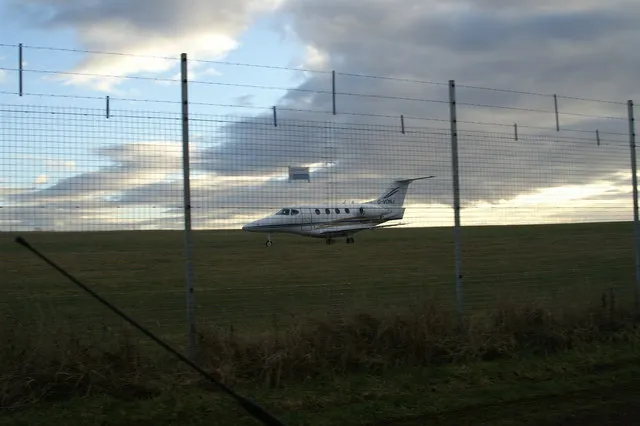
Photo: Adrian and Janet Quantock, CC BY-SA 2.0, via Wikimedia Commons
For a private-jet client, the most valuable upgrade is often not a larger cabin or a longer range. It is the thirty minutes not spent in a holding pattern over the Thames Estuary, the handling agent who knows the car will be at the aircraft steps, and the airfield that puts you within a short drive of the meeting rather than an hour of motorway. Heathrow remains the UK’s principal gateway for airline travel, but it is rarely the natural centre of gravity for business aviation. The smaller airfield — chosen with care — can transform the day.
Why the airfield matters as much as the aircraft
Private aviation sells time. Yet many clients spend more of it on the ground than they expect: navigating airline terminals, waiting for bags, or crossing the country to reach a major hub. A well-chosen secondary airfield can remove much of that friction. It can also improve positioning, because the aircraft can be based closer to the client or the destination, reducing empty flying and awkward departure times.
The advantage is not automatic. Smaller airfields vary enormously in runway length, opening hours, customs provision, handling quality and weather resilience. The right question is not which airfield is biggest, but which one fits the mission, the aircraft and the client’s ground arrangements.
Nine UK hubs worth considering
-
Farnborough (FAB), Hampshire. The business-aviation specialist south-west of London. It makes sense for clients in Surrey, Hampshire, Berkshire and west London who value a calm, purpose-built environment and predictable ground handling. It is particularly effective for short European legs and for Alpine departures when the aircraft is positioned the night before.
-
Biggin Hill (BQH), Kent. The south London alternative with a long business-aviation pedigree. For Canary Wharf, the City and Kent, it can remove the westbound crawl. It suits light and midsize jets on European and domestic missions; confirm runway and handling limitations for larger types.
-
Oxford (OXF), Oxfordshire. A strong choice for the Thames Valley, Cotswolds and Midlands. It reduces road transfer for clients who would otherwise cross the country to reach a London airport. Good for business and leisure trips to Europe; check customs and opening hours for early or late departures.
-
Cambridge (CBG), Cambridgeshire. The East of England’s practical gateway. Useful for the technology corridor, Newmarket and Norfolk. It can be smarter than a London airfield for clients already east of the M11, and it handles a useful range of light and midsize aircraft.
-
Leeds East (EGCM), Yorkshire. A quieter northern option that can beat the airline scrum at Leeds Bradford. For clients in York, Leeds and the East Riding, it can cut ground time and improve positioning for Scottish or European trips. Aircraft suitability and handling arrangements should be confirmed in advance.
-
Blackbushe (BBS), Hampshire. A useful light-jet and turboprop airfield for Berkshire, Hampshire and Surrey. It is not the right choice for every mission, but for short domestic and near-European trips it can deliver a notably efficient ground experience.
-
White Waltham (EGLM), Berkshire. One of the UK’s most established general-aviation airfields. It suits light aircraft and short sectors; it is less about cabin size and more about convenience for clients in the Thames Valley. Always verify operating hours, handling and aircraft limits.
-
Duxford (QFO), Cambridgeshire. A heritage airfield with a practical role for light aviation in the East. It can work well for short trips and positioning, particularly for clients near Cambridge and the M11 corridor. It is not a substitute for a full-service business-aviation terminal, so set expectations accordingly.
-
Kemble (EGBP), Gloucestershire. A former RAF station with space and a useful westerly position. It can serve the Cotswolds, Bristol and the west of England when the mission and aircraft fit. Confirm handling, customs and opening arrangements before committing.
Matching the airfield to the journey
The common thread is not that smaller airfields are inherently better; it is that they are more specific. A hub that is brilliant for a Surrey-based client flying to Geneva may be wrong for a Yorkshire client heading to Edinburgh. The calculation should include the client’s home or office, the destination airport, the aircraft type, the time of day and the season.
For a City-based client on a short European business trip, Biggin Hill may be the obvious choice. For a Cotswolds household departing for the Alps, Oxford or Kemble may cut an hour of road time before the flight even begins. For a Yorkshire family heading to Scotland, Leeds East can be a calmer and faster proposition than a congested airline airport. Heathrow still has its place — particularly for long-haul connections or when the destination airline terminal is the true centre of the trip — but it should be a deliberate choice, not a default.
The ground-level gain
The benefits compound. A shorter drive to the airfield reduces the buffer time needed. A dedicated handling agent can process passengers quickly. A smaller apron means less taxiing. A sensible departure slot can mean a more civilised arrival time at the destination. For a day trip, these advantages can be decisive; for a holiday, they set the tone.
There is also a commercial advantage in smarter positioning. If the aircraft is already in the right part of the country, the operator may avoid a long empty leg. That can improve both cost and scheduling. It is worth asking whether a different departure airfield changes the quote — not always, but often enough to matter.
A checklist before you choose
Before committing to a secondary airfield, confirm the aircraft type and runway performance; opening hours and customs or immigration provision; the handling agent and terminal facilities; road transfer, parking and drop-off arrangements; weather resilience and alternate options; peak-period slots and turnaround times; and the all-in cost, including landing, handling, passenger and security fees.
The EuroJet view is straightforward: the best private-jet journey is door-to-door, not wingtip-to-wingtip. The airfield is part of the service, not an afterthought. Choose the one that makes the whole day work, and the aircraft will do the rest.