The Repositioning Advantage: Flying Private from the UK on an Empty Leg
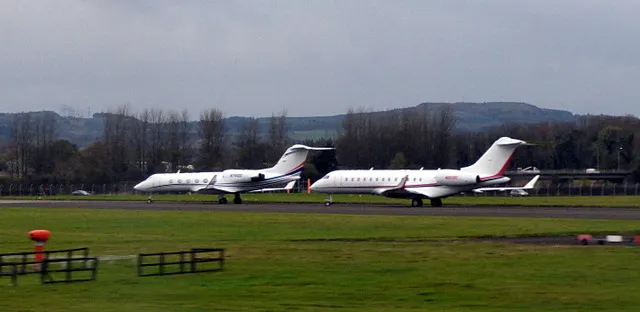
Photo: Thomas Nugent , CC BY-SA 2.0, via Wikimedia Commons
Private aviation has long been associated with flexibility, discretion and a price point that places it beyond the reach of most leisure travellers. The empty leg is the exception. When an aircraft must return to its base or move to its next charter, the operator may sell the repositioning sector at a substantial discount rather than fly it empty. For UK travellers with a degree of timing flexibility, this can turn a private flight from an indulgence into a credible alternative to a first-class scheduled ticket — provided the arrangement is understood on its own terms.
What an empty leg actually is
An empty leg — sometimes called a repositioning flight — is a one-way sector that an operator needs to fly without passengers in order to reach the next booking. Rather than absorb the full cost, the operator may offer the sector to the market at a reduced rate. Savings of 50 to 75 per cent against a standard charter quote are not unusual, particularly on short European routes or on aircraft returning to London after a drop-off.
The important distinction is that the customer is not buying a bespoke charter. The route and timing are set by the operator's operational needs. A flight might depart from Farnborough or Luton at short notice, or from a regional airport such as Birmingham, Manchester or Edinburgh, with a destination that suits the aircraft's next movement rather than the passenger's ideal itinerary. The value lies in recognising when those constraints align with a genuine travel requirement.
Where UK travellers find them
Empty-leg availability is rarely advertised in the manner of a scheduled fare. It is distributed through charter brokers, operators' own listing pages and specialist platforms that aggregate repositioning sectors. For UK clients, the most useful sources tend to be established brokers with direct relationships across the London airport system and the regional business-aviation network. A broker can confirm whether a listed sector is genuinely available, whether the aircraft and operator meet the required safety standards, and whether the quoted price includes landing fees, handling and taxes.
London remains the deepest market, with Farnborough, Luton, London City, Biggin Hill and Stansted all generating frequent movements. Regional airports matter too: empty legs from Manchester, Birmingham, Edinburgh, Glasgow and Leeds Bradford can be particularly attractive for clients who would otherwise position to the South East. The trade-off is volume — the further from London, the thinner the listings — so a willingness to monitor the market over several weeks is essential.
The trade-offs behind the saving
The first constraint is time. Empty legs are often confirmed only a few days before departure, and some appear with less than 24 hours' notice. That suits a spontaneous weekend or a flexible business trip; it is poor ground for a fixed family holiday or an event with immovable dates. The second is baggage and party size. The aircraft is chosen for the operator's needs, not the passenger's, so the cabin may be smaller than expected and luggage capacity limited. Ski bags, golf clubs and large cases should be declared at the enquiry stage.
The third is routing. An empty leg may land at an airport that is convenient for the aircraft but not for the passenger, requiring an onward transfer by car or train. A flight advertised as "London to Nice" may in practice depart from a regional airport or arrive at a secondary field. The final consideration is the price itself: a headline figure may exclude positioning costs, crew expenses, de-icing in winter or out-of-hours fees. A reputable broker will provide a fully costed quote rather than an attractive but incomplete number.
How to book without compromising service
The practical approach is to register a clear brief with one or two trusted brokers rather than chase every listing. Specify the likely route, the number of passengers, the baggage requirement and the degree of date flexibility. Ask for the operator's Air Operator Certificate details, confirm the aircraft type and age, and request the full terms before paying. Empty legs are sometimes non-refundable and may be subject to re-routing if the operator's schedule changes, so travel insurance and a realistic contingency plan are sensible.
It also pays to compare the empty leg against the alternatives. A discounted private sector may still be more expensive than a flexible business-class fare once transfers and overnight accommodation are included. The comparison should be made on total journey time and total cost, not on the charter price alone. For a party of four travelling to a regional European destination, the economics can be compelling; for a single traveller on a busy trunk route, the scheduled cabin may remain the more rational choice.
When an empty leg makes sense — and when it does not
An empty leg is genuinely worth considering when the dates are flexible, the party is large enough to justify the aircraft, and the destination is served by an airport that suits the ground plan. It is less suitable when the trip is built around a fixed event, when the baggage is bulky, or when the passenger expects the full trappings of a bespoke charter. The saving is real, but it is compensation for uncertainty rather than a free upgrade.
For UK travellers, the empty-leg market is best treated as a specialist tool rather than a general fare class. Used selectively, it can deliver the privacy and time savings of private aviation at a price that bears comparison with the front cabin. Used without discipline, it can produce a costly detour. The difference lies in understanding that the operator is selling a solution to an operational problem — and in knowing when that solution happens to fit.